
Nancy Rhine, MS, LMFT,CPG
Soaring Numbers of Adult Children Caring For Aging Parents
 According to US News & World Report: “The number of people taking care of an aging parent has soared in the past 15 years. In 1994, only 3 percent of men and 9 percent of women helped provide basic care for a parent. Fifteen years later, 17 percent of men and 28 percent of women provided such care.”
This article also speaks to the importance of creating a sound financial plan to manage assets for sustainability through older life – knowing where you stand money-wise informs your decisions about caregiving, medical, emotional support and other resources. 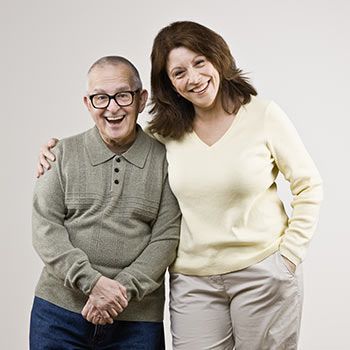
So often I see older adult clients who don’t understand what assets they have. As a psychotherapist, I am not a financial adviser. I refer out to trusted local financial planners who work honestly and diligently for clients who have a lot of money and clients who have worked hard but don’t have much extra.
It seems obvious but somehow this gets lost in the shuffle: without knowing exactly how much you have, it isn’t possible to intelligently plan how much you can spend on a personal assistant to help with things like bill-paying, organizing paperwork, balancing checkbooks, driving when you are unable to drive anymore, running errands, doing some light housecleaning, maybe some light meal prep – all of these kinds of tasks that keep us thriving and living in our own homes when we are getting to the place where we can’t do all of these things ourselves.
Another point I feel it’s important to point out is that once you know what you have to work with, there is a WIDE range of creative and available ways to organize care. The range is determined by the spectrum of being able to pay for all outside help to divvying up all the caergiving tasks amongst the adult children whether they are living close by or far away to a combination of those. You have to know where you stand before you can strategize!
Read more about it in The Jerusalem Post article entitled “Your Investments: When Children Take Care of Elderly Parents”.
Refuting Society’s Myths About Aging
 I wrote most of an article about this very topic the other day. Before I had a chance to post it, I got a link in my email from one of my favorite blogs “A Senior Portal” about this very same topic with almost the same bullet points! So, clearly, many of us are thinking along the same lines!
Here are the list of some destructive and sometimes downright silly myths we encounter on a daily basis in our society – false messages that I work hard to remind my clients, their families and myself aren’t true!
Myth: Depression is inevitable in older age.
FACT: Although growing older brings with it many challenges but many people are grappling with real issues which can be addressed and resolved with some help. Things like therapy for lifelong personality patterns and coping skills that have become overtaxed with stressors. Coping skills have worked in the past and been forgotten can be brought back into the picture, and new healthy habits can be learned and practiced. Solutions can be found to deal with concerns about things like new living arrangements, finances, chronic health problems, the loss of loved ones and their own mortality. Read: How Therapy Can Help In Golden Years.
Myth: Older people aren’t givers to society, they’re takers.
 FACT: Read about how older people contribute to society through working longer, through being consumers, babysitting, caregiving, mentoring, volunteering, and more. Why Seniors Matter — and How They Contribute to Our Everyday Lives.
Myth: Cognitive decline in older age goes without saying.
FACT: One of my favorite advocates for older people was Dr Gene Cohen, a renowned geriatric psychiatrist and “buster of aging-myths”, wrote “ science shows that brain cells do not die off as we age, but continue to grow.” Read more about his work on NPR’s blog. Also, read “The Older Mind May Just Be A Fuller Mind”, a great recent article from the wonderful New York Times blog The New Old Age.
Myth: Old people should be not seen and not heard.
FACT: Older people in our societies are the keepers of stories, of wisdom. Famed psychologist Joan Erikson tells the story how how she explored the root meaning of “wisdom” since she was being called “wise” all the time as she grew into her 90’s. To her surprise and yet it made sense, the root meaning of wisdom is “to know how to”. A lovely story she relates is how Margaret Meade told her about Alaskan red tail deer – older females lead the herd to water during times of drought because they are the ones who remember the old watering holes.
Myth: Older people aren’t sexy. 
FACT: Feeling sexy is not limited by age. There are many stories from nursing homes where residents are “teepee creeping” at night and enjoying intimacy. Retirement facilities of all sorts should allow for privacy for residents so that can retain their sense of sexuality and intimate relationships without fear of being barged in on.
Myth: Older people don’t benefit from therapy. “You can’t teach an old dog new tricks.”
FACT: See the “How Therapy Can Help” article link above.
———————————————————————————————————————————-
And here is more from My Senior Portal:
Myth: To be old is to be sick.
FACT: Even in advanced old age, most people are not disabled, and the proportion of older Americans who are disabled is going down, not up. Only a small percentage of older people live in nursing homes; the remainder live in the community at large.
Myth: Older adults are more depressed than younger adults.
FACT: Depression occurs more commonly in people who have medical problems. Some older people have more medical conditions than younger people do, so it may seem as if more older people are depressed.
Older adults who do face depression are finding that it doesn’t carry the same stigma that it did years ago. In fact, many well-respected people like the newsman Mike Wallace have found helpful treatment for their depression. They’ve also spread the word that depression—and treatment for it—are not things to be ashamed of.
Myth: Sex stops after 65.
FACT: Sexual activity does not have to stop once someone gets older. Researchers at Duke University’s Center for the Study of Aging and Human Development surveyed 254 men and women between the ages of 60 and 94 about their sexual activity. They found that these older individuals were still interested in sex and continued to have active sex lives.
Myth: You can’t teach an old dog new tricks.
FACT: As we age, we may not be able to learn new things as quickly as we did when we were younger. However, learning is a life-long process. Three things that are good for our minds as we age are regular physical activity, a strong social support system, and a belief in our own ability to handle what life has to offer.*
Myth: Older adults don’t pull their own weight.
 Fact: One-third of older people work for pay. One-third work as volunteers in churches, hospitals, and other organizations. Many others provide much-needed assistance to family members, friends, and neighbors.*
Myth: It’s too late or it’s pointless to change bad habits in later life.
FACT: Certainly, it’s better to start healthy habits early, but the truth is, it’s almost never too late to benefit from healthy living. Even damage from decades of too much alcohol or fat-laden food, lack of exercise, or smoking can be reversed or limited. A fresh start can help a person recover lost abilities and decrease the risk of certain illnesses. In some cases, it can even improve a person’s health.*
Myth: Mental sharpness declines with age.
FACT: An active mind and clear thoughts go hand in hand. Reading, doing puzzles, and taking classes are excellent ways to challenge our brains. Writing to friends and hobbies like knitting and woodworking are also good for our minds.
* Adapted from the book Successful Aging by John W. Rowe, M.D., and Robert L. Kahn, Ph.D.
Depression is NOT inevitable in older life.
 Our youth-oriented Western culture seems to tell us that we are all doomed to succumb to debilitating depression as an inevitable part of growing older. This is not true!
Sure, it is true that getting old “ain’t for sissies” as Bette  Davis famously put it. There are a myriad of challenges that confront us. Nobody would argue that! We know what those challenges are – all kinds of changes, losses of various sorts from little things to profound ones, aches and pains, the gamut.
But, you can also thrive in later years. It’s about your mindset, your emotional and spiritual practices and your strong support network. The kids called support networks these days, their “posse”. Your posse can be made up of old and new friends, your peers, support group members, family, pets, counselors, trusted doctors and spiritual advisors.
Generally, people like you have an assortment of healthy, tried-and-true coping skills that have gotten you this far in your life. Perhaps now, however, you are encountering an accumulation of situations that tax those skills. It may be time to remember your old skills and to learn new ones. It may likely be time as well to rethink your life’s purpose. Purpose is key to keeping your mood up and your heart content.
What stands in the way? Well, too many times, that old Shame rears its head and tells you that you ought to be able to figure this out on your own, that you ought to be able to just “tough it out” and do it alone or else you’re weak. You can’t burden your children so what to do? As the blue box here says, don’t keep it bottled up inside!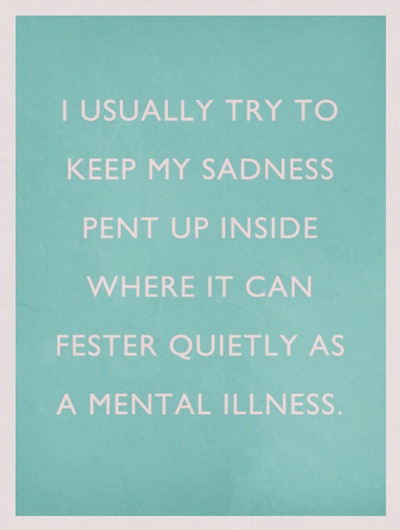
What people often don’t realize is that you are not alone in feeling challenged, stressed, confused, overwhelmed or anxious. These feelings surface when we are going through new phases and transitions in our lives. It’s during these times that it becomes so important to realize you don’t have to reinvent the wheel. There are many practices and tips for how to increase your enjoyment of life in older years.
The important thing is to not give up and figure that just depression goes with the territory. That may be what society tells you, it might be the prevailing attitude. But it is not true. Reach out for help. Counseling and support can turn your life around and help you reclaim your confidence, solid footing and peace of mind. Isn’t it worth a try? What have you got to lose!
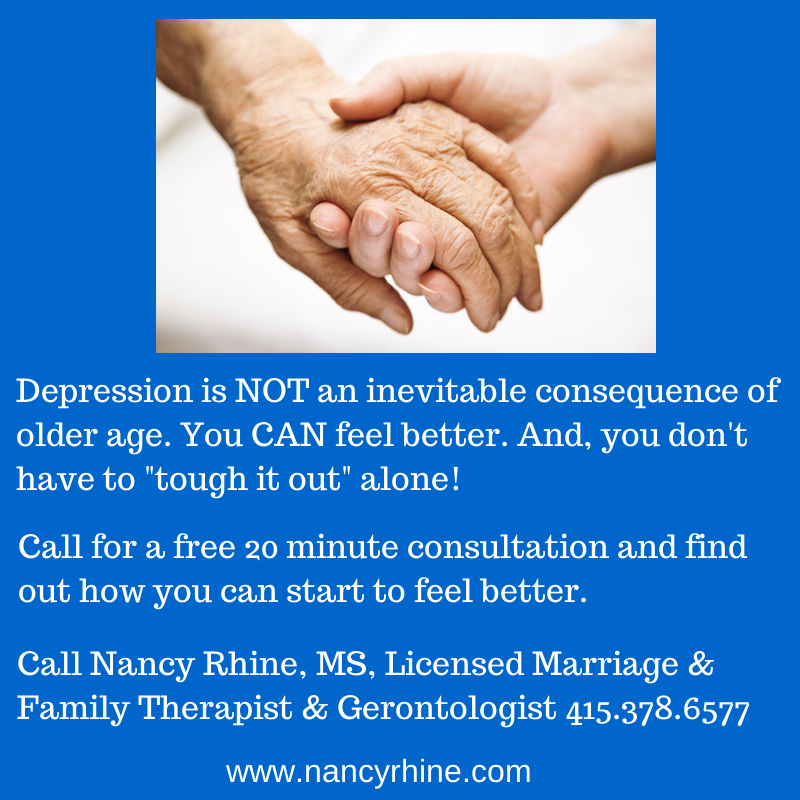
June 12 Marin Death Cafe
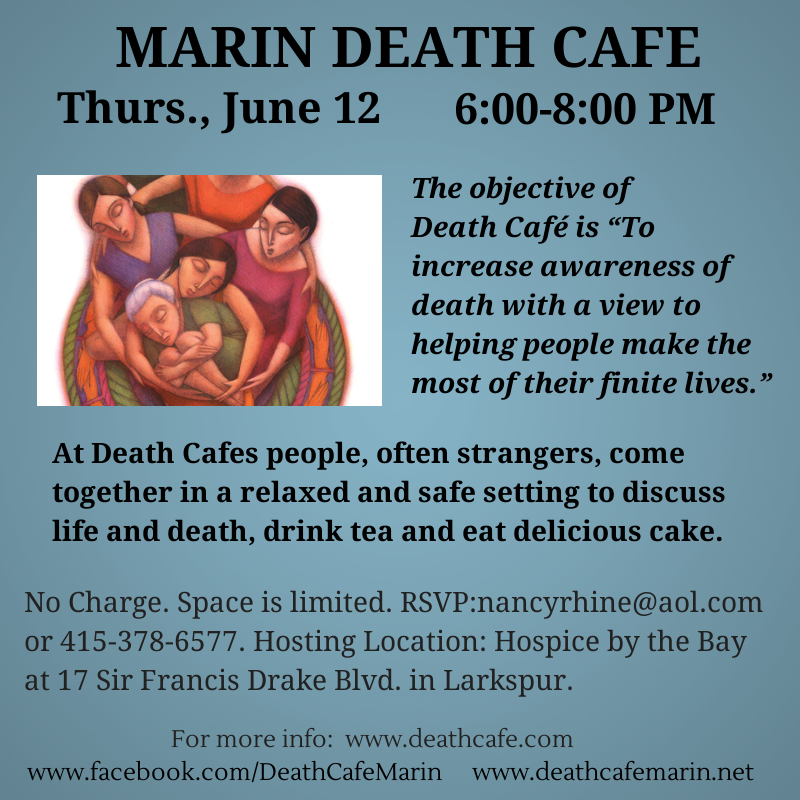
Marin Death Cafe June 12