Monthly Archives: August 2026
Finding Our Place in the Lineage
Ancestors, Life Review, and Meaning in Later Life
Lately, I have been spending a surprising amount of time with the dead.
Not in a morbid way. Quite the opposite. I have been searching old census records and church registers, following family names across borders, learning the names of small towns and villages, and discovering the landscapes where people whose blood I carry once made their lives.
What began as a practical project—documenting my Canadian ancestry as part of an application for dual U.S.-Canadian citizenship—has become something much richer.
I have found new roots.
And perhaps even more importantly, I have found new stories.
As I’ve followed my Canadian families through Ontario and farther back into Europe, people who once existed for me mostly as names and dates have begun to take on dimension. I find myself wondering about their lives: Where did they live? What did the land around them look like? Why did they leave one place for another? What did they lose? What did they hope for? What did they carry with them?
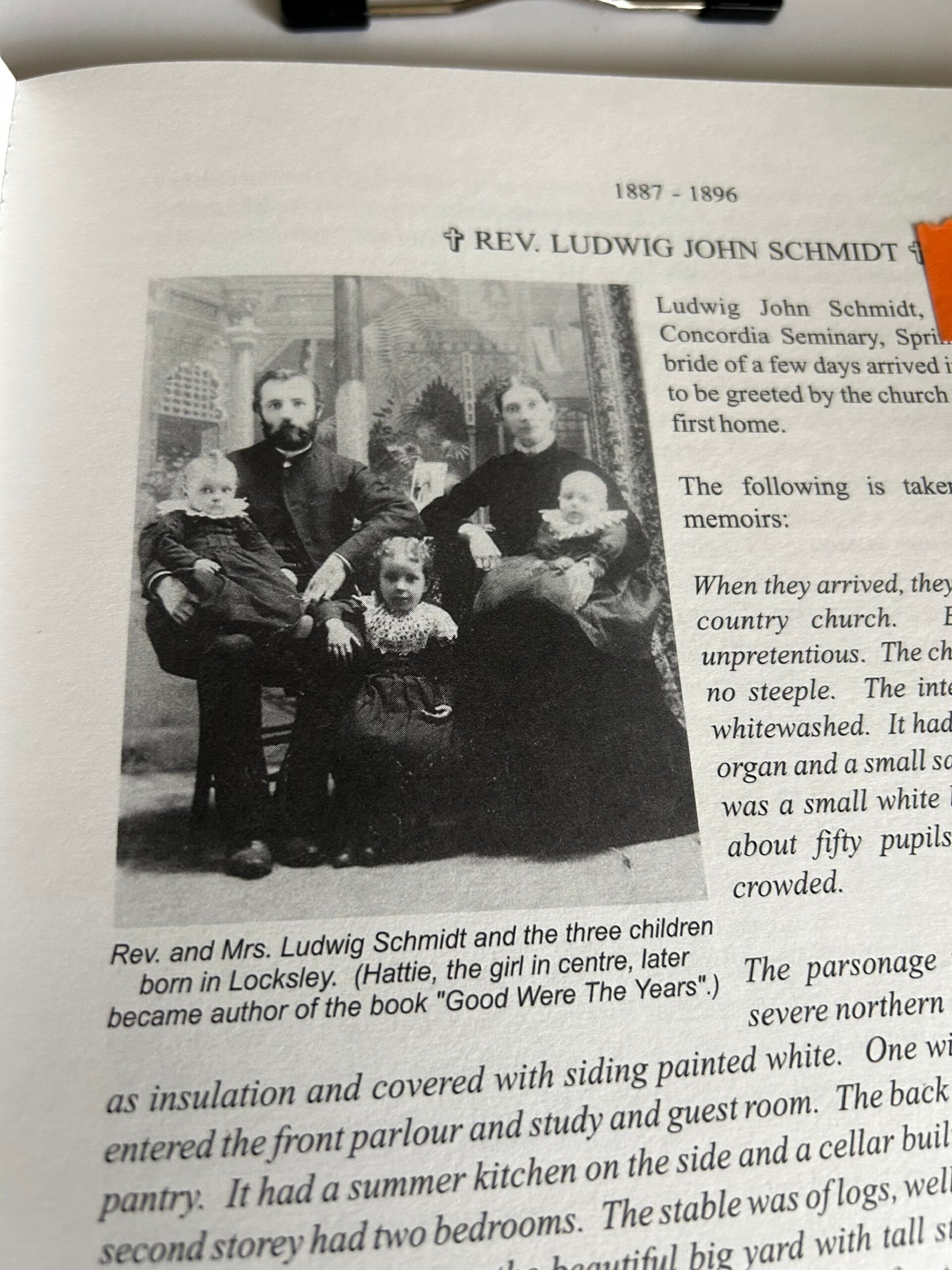
(Schmidt family circa 1893 in Pembroke, Ontario)
I hadn’t anticipated how nurturing this search would feel.
Life Review and the Work of Later Life
The developmental psychologists Erik and Joan Erikson described the central task of later life as a movement between integrity and despair.
As we grow older, we naturally begin to look back. We take stock. We remember people we loved and people we lost. We revisit choices, accidents, accomplishments, regrets, relationships, roads taken and roads not taken.
Ideally, something begins to come together.
Integrity doesn’t mean deciding that everything in our lives was good or that we made all the right choices. No one gets that life. It means becoming increasingly able to hold the whole story—to recognize that this was my life, in all its beauty, difficulty, mystery and imperfection.
I think our ancestors can become part of that process.
Life review usually begins with the life we ourselves remember. But what happens when we extend the frame?
Who came before me?
What did I inherit from people I never knew?
What patterns have traveled through my family—not only wounds and hardships, but courage, faith, humor, resourcefulness, creativity, restlessness, tenderness, wanderlust, or a longing for home?
Suddenly, the story of a single life becomes part of a much longer human story.
We Come From Somewhere
There is something powerful about discovering that we come from actual places.
Our ancestors weren’t abstractions. They woke up somewhere in the morning. They looked at particular hills, fields, forests and rivers. They had neighbors. They buried people they loved. They cooked meals, raised children, worried about money, worshiped or didn’t, endured winters, celebrated marriages, got sick, packed belongings, crossed borders and began again.
Some stayed in one place for generations. Others moved.
My own family research has increasingly become a story of movement—across Europe, into Canada, onward into the United States, and eventually, generations later, all the way to California.
And now, in my seventies, I find myself tracing the path backward.
There is something wonderfully circular about that.
The citizenship project began with the question, Can I document that my grandfather was born in Canada?
But underneath that practical question, another one has gradually emerged:
What does it mean that these are my people?
Psychedelics, Aging, and Integration
These questions also intersect with my professional life.
Much of my counseling ministry over the years has involved aging, grief, loss, mortality, spiritual life and the search for meaning. More recently, that work has also included helping people prepare for and integrate psychedelic-assisted journeys.
I don’t provide or administer psychedelic medicines. My role is in the deeply important work that happens around an experience: helping someone prepare thoughtfully for what may arise, and afterward helping them listen to what the experience may be asking of them and integrate it into the life they are actually living.
Again and again, this territory brings us into some of the same great human questions that arise in life review:
Who am I?
Where do I belong?
What have I inherited?
What am I ready to put down?
What still needs forgiving?
What do I want to carry forward?
What will remain after I am gone?
For two years, I also led EPIC—the Elders’ Psychedelic Integration Café—a group for people ranging in age from 69 to 92. It became a place where older adults could support one another as they made their own deep dives into self-exploration and then worked to understand and integrate what they had encountered.
There was something particularly moving to me about doing this work in community. At an age when our culture can subtly—and sometimes not so subtly—suggest that the important developmental work is behind us, these elders were still exploring. Still questioning. Still discovering parts of themselves. Still changing.
Inner development does not have an expiration date.
This year I have also had the privilege of being interviewed for two books exploring different aspects of psychedelic experience and practice.
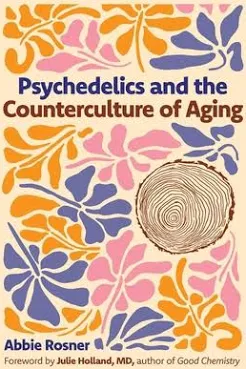
The first, Psychedelics and the Counterculture of Aging, by Abbie Rosner, was published in July. Because some of my work in this field has taken place underground, I appear anonymously in the book. Rosner’s exploration of psychedelics and aging touches territory especially close to my heart: how we might approach growing older not simply as a process of diminishment, but as a stage of life that can continue to contain discovery, transformation and meaning.
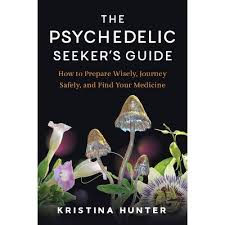
A second book, Kristina Hunter’s The Psychedelic Seeker’s Guide: How to Prepare Wisely, Journey Safely, and Find Your Medicine, will be published in October. I was interviewed for the book about my work and experience helping elders prepare for and integrate psychedelic-assisted journeys.
Genealogy may seem far removed from psychedelic work. Yet lately I have been struck by how closely related they can be.
Both can expand the boundaries of the story we tell about ourselves. Both can invite us to ask where we came from, what we carry, what belongs to us and what does not, and how we want to live with the time that remains.
And both, in their own ways, can remind us that our individual life is part of something much larger.
Becoming an Ancestor
Perhaps this is one of the invitations of later life: not only to look back at our ancestors, but to recognize that we are becoming ancestors ourselves.
That realization changes the question.
We aren’t only asking, What did I receive?
We can also ask, What am I passing on?
Not simply money or possessions, but stories. Values. Ways of loving. Family truths that might otherwise disappear. Recipes. Photographs. Letters. Courage. Apologies. Traditions. A sense of place. Perhaps even the willingness to tell a more honest story about where we came from.
My Canadian citizenship project is still underway. There are records I’m waiting for, mysteries I haven’t solved, and ancestors whose stories I am only beginning to understand.
But already the search has given me something I didn’t know I was looking for.
I began by trying to prove a lineage on paper.
Instead, I have found myself feeling more deeply held by one.
And at this stage of life, that feels like a gift.